
By Dr. Nathan Orvets, ROC Orthopedics
Curious about the most common symptoms of a rotator cuff tear? In this post, we’ll outline the main rotator cuff tear symptoms, along with how tears can be diagnosed and treated.
Key Symptoms of a Rotator Cuff Tear
The rotator cuff is a group of four muscles and tendons that stabilize the shoulder joint and allow for a wide range of arm movements. When torn, a variety of symptoms can emerge depending on the severity and type of the tear.
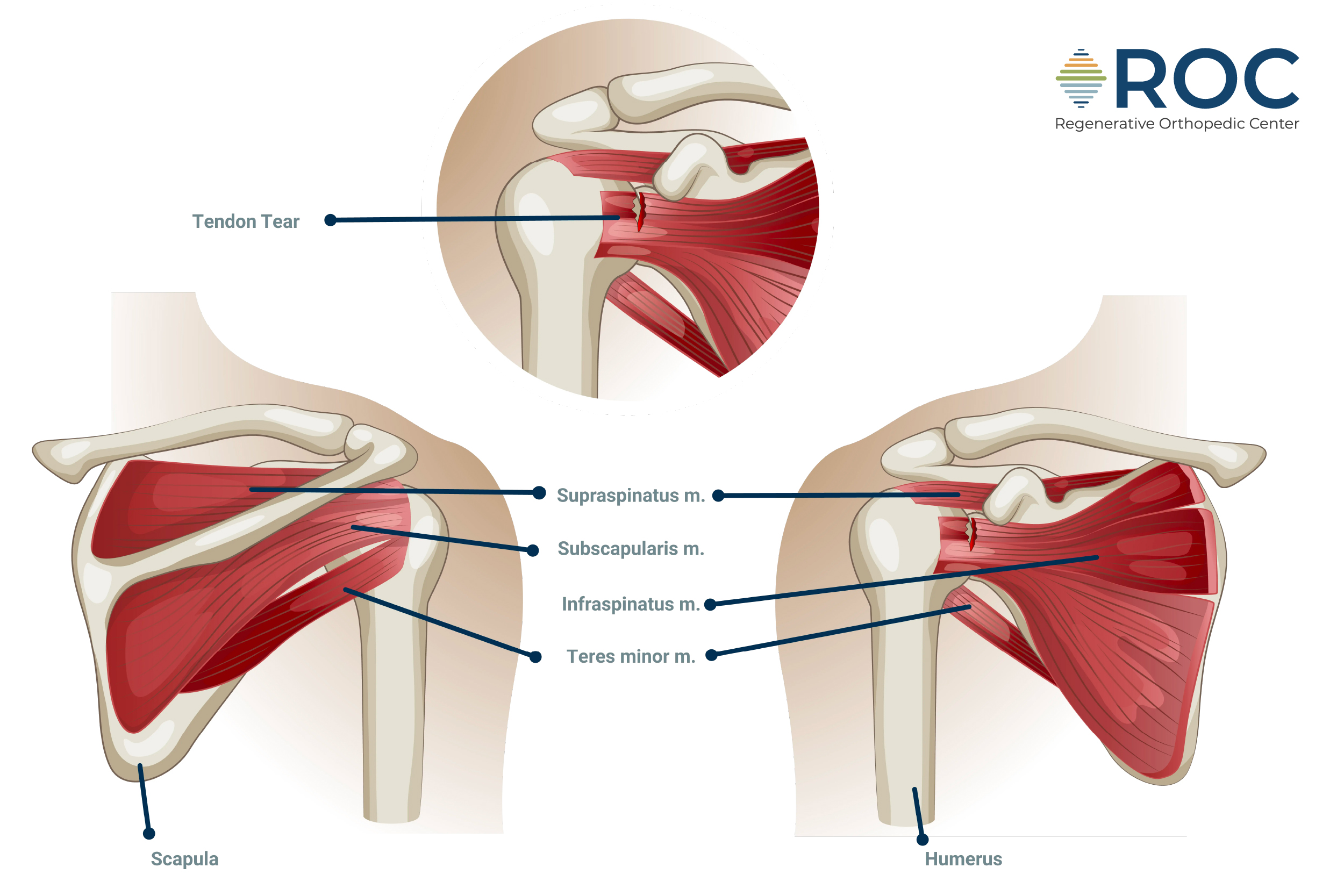
Early recognition of symptoms can greatly improve the effectiveness of treatment and recovery. In the following subsections, we’ll take a closer look at what to watch for.
- Persistent Shoulder Pain: Persistent pain around the joint, particularly at night or when resting, is a common sign of a rotator cuff tear. It can range from a dull ache deep to sharp pain that often disrupts sleep and daily activities. Promptly addressing shoulder pain is important to prevent further damage and alleviate discomfort.
- Difficulty with Arm Movement: A rotator cuff tear can make simple movements like reaching behind your back or lifting objects away from your body or overhead difficult due to pain or weakness. Overhead movements or repeated use of the arm can exacerbate this pain. This limitation can significantly impact your ability to perform everyday tasks.
- Audible Sounds in the Shoulder: Popping or clicking sounds when moving your shoulder could signal a tear. These noises, especially when lifting the arm overhead or rotating it, might indicate instability. Though these sounds aren’t definitive proof of a rotator cuff tear, they should be evaluated, especially if accompanied by pain or weakness.
- Shoulder Swelling and Tenderness: Localized swelling and tenderness around the shoulder joint can indicate a rotator cuff issue. Swelling may suggest inflammation, and tenderness, especially when pressure is applied, can signal damage to the tendons or other soft tissues. Early recognition of these symptoms is important for effective treatment.
- Limited Range of Motion: A restricted range of motion is common with rotator cuff tears, and it can make routine activities like combing your hair or reaching for objects difficult. Early intervention is important to restore the range of motion.
- Arm Weakness: Rotator cuff tears frequently cause weakness in the affected arm, making lifting and holding objects more challenging. This weakness, in combination with pain, may significantly affect daily life. Strengthening exercises and physical therapy can help improve muscle strength and shoulder function.
Diagnosing Rotator Cuff Tears
Diagnosing a rotator cuff tear involves a combination of physical examinations and imaging tests. Your doctor will evaluate your medical history and symptoms during a physical exam to better understand the injury. This initial assessment helps determine the best course of action for further diagnosis and treatment, especially if a rotator cuff tear is suspected.
Common imaging tests for diagnosing rotator cuff tears include magnetic resonance imaging (MRI), ultrasound, and X-rays. These tests provide detailed images of the shoulder joint, helping to identify the injury’s location and severity. Imaging also allows your doctor to distinguish between partial and full-thickness tears, which helps inform the treatment plan.
A proper diagnosis is essential for developing an effective treatment plan. Early and accurate diagnosis can greatly improve the chances of a successful recovery and return to normal activities.
Treatment Options for Rotator Cuff Tears
Treatment for rotator cuff tears depends on the severity of the injury. Nonsurgical treatments may include physical therapy, medications, and injections.
Physical therapy is tailored to recover strength and flexibility, helping to stabilize the shoulder. Nonsteroidal anti-inflammatory drugs (NSAIDs) may be recommended for pain relief and inflammation reduction. In some cases, corticosteroid injections may be administered for short-term pain relief.
For severe tears, large tears after an injury, or tears that do not improve after months of conservative treatment, surgery may be recommended. Surgical options include rotator cuff tendon repair and reverse shoulder replacement. Depending on the tear, surgical approaches may be performed using arthroscopic, a minimally invasive technique, or open techniques. The primary goal of surgery is to restore function and allow patients to return to normal activities with minimal discomfort. When rotator cuff tears are too large to be repaired, a reverse shoulder replacement maybe a good option.
An experienced shoulder specialist can evaluate your specific injury and guide the most appropriate treatment plan.
Preventing Rotator Cuff Injuries
To help prevent rotator cuff injuries, consider the following strategies:
- Maintain proper form and posture during activities to reduce stress on the shoulder.
- Take breaks during repetitive overhead movements to minimize strain.
- Incorporate strengthening exercises to build shoulder muscle resilience.
These prevention strategies help strengthen the shoulder and increase range of motion while minimizing excessive shoulder strain.
Summary
Recognizing the symptoms of a rotator cuff tear early can impact the effectiveness of treatment and recovery. Persistent shoulder pain, difficulty with arm movement, audible sounds, swelling and tenderness, limited range of motion, and arm weakness are all indicators of a potential rotator cuff tear. A comprehensive diagnosis involving physical exams and imaging tests is important for developing an effective treatment plan.
Treatment options range from nonsurgical methods like physical therapy and medications to surgical interventions for severe cases. Preventing rotator cuff injuries involves proper form, rest, and specific exercises to strengthen the shoulder muscles.
Frequently Asked Questions
What are the common symptoms of a rotator cuff tear?
Common symptoms of a rotator cuff tear include persistent shoulder pain, difficulty moving the arm, audible sounds during movement, swelling, tenderness, limited range of motion, and arm weakness. Recognizing these symptoms early can help in seeking timely treatment.
How is a rotator cuff tear diagnosed?
A rotator cuff tear is diagnosed through a thorough physical examination and imaging tests such as MRI, ultrasound, or X-rays to assess the location and severity of the tear. This comprehensive approach allows for an accurate diagnosis.
What are the treatment options for a rotator cuff tear?
Treatment options for a rotator cuff tear include nonsurgical methods like physical therapy, medications, and injections, as well as surgical interventions such as tendon repair or reverse shoulder replacement for more severe cases. It is essential to consult an experienced shoulder specialist to determine the best approach based on individual circumstances.
How can I prevent rotator cuff injuries?
To help prevent rotator cuff injuries, maintain proper form during activities, take regular breaks from repetitive overhead motions, and engage in exercises that strengthen the shoulder muscles. Implementing these strategies can reduce your risk of injury.
When should I seek medical attention for shoulder pain?
Consider seeking medical attention if you experience persistent pain that doesn’t improve with rest and home treatments. Additionally, if pain interferes with daily activities, it may be time to consult a doctor.
Key Takeaways
- Key symptoms of a rotator cuff tear include persistent shoulder pain, limited range of motion, and arm weakness.
- Diagnosis typically involves a physical examination along with imaging tests like MRI and X-rays to determine the tear’s severity.
- Treatment options range from nonsurgical methods such as physical therapy and medication to surgical options for severe tears.
If you’re experiencing shoulder pain and suspect a rotator cuff tear, schedule a consultation with one of our experts today.