By Dr. Nathan Orvets, ROC Orthopedics
If you’re wondering whether surgery is necessary for biceps tendon injuries at the shoulder, you’re not alone. For some, surgical intervention may be helpful, while others can find relief through non-surgical methods. In this post, we’ll discuss when surgery might be considered for proximal biceps tendon injuries, as well as what non-surgical treatments may be available.
Understanding Proximal Biceps Tendon Injuries
The biceps muscle is composed of two heads: the short head and the long head. These heads are connected to the shoulder by the proximal biceps tendons. The long head of the biceps tendon is particularly vulnerable to injuries because it passes through the shoulder joint to attach at the glenoid.
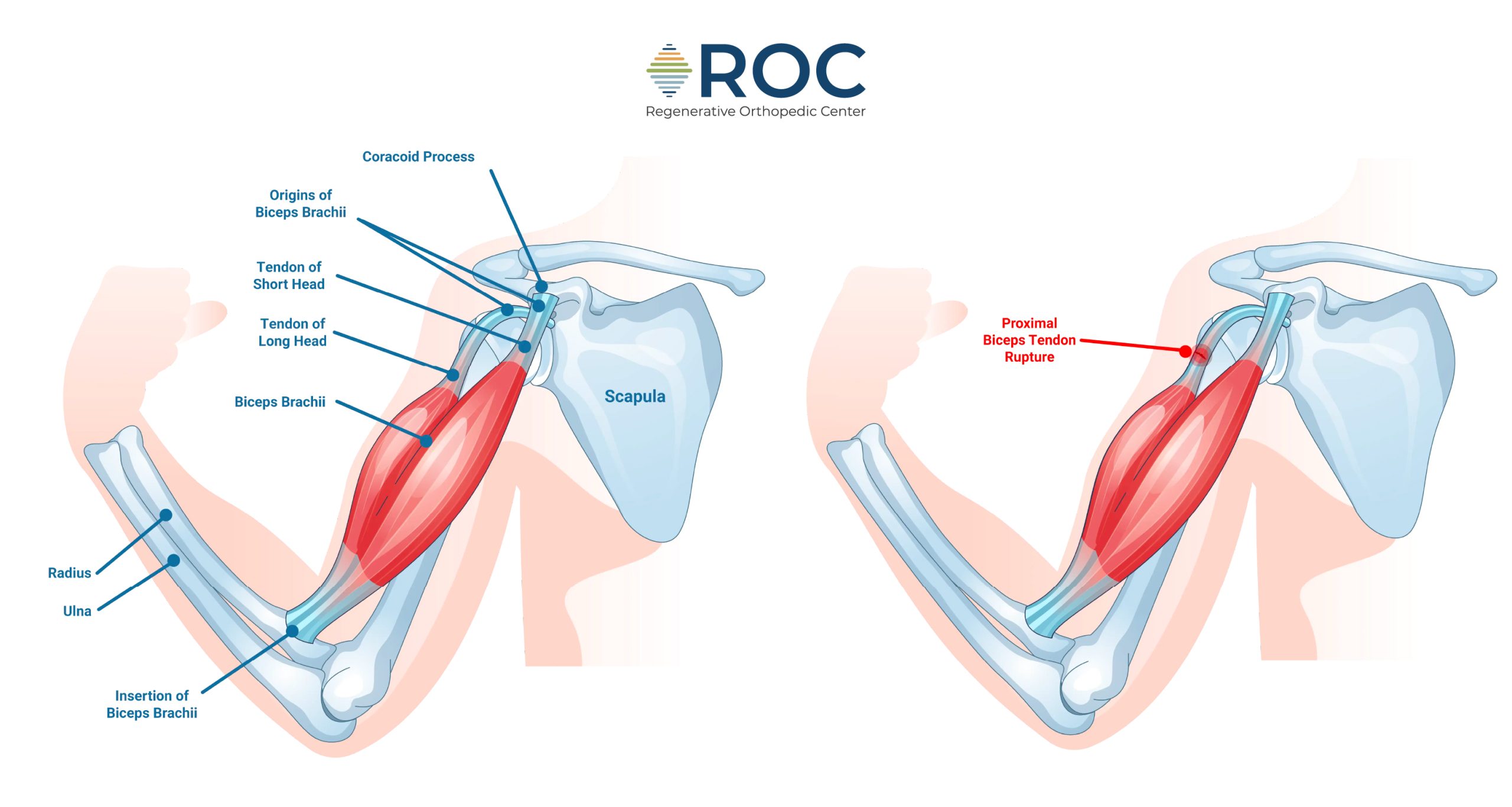
Injuries to the proximal biceps tendons can result from acute trauma or chronic overuse. Activities involving repeated overhead motions, lifting heavy objects, or even a fall can lead to these injuries. Over time, overuse can cause degeneration of the tendon, making it more susceptible to tendon tears and ruptures.
Knowing the anatomy and common causes of biceps tendon injuries is important for recognizing symptoms and seeking appropriate care.
Symptoms of Proximal Biceps Tendon Injuries
- Sharp Pain: Many patients report an unexpected, sharp pain in the upper arm at the moment of injury, sometimes accompanied by an audible snapping sound.
- Weakness: Following the initial injury, weakness in both the shoulder and elbow joint is common. This weakness can make it difficult to perform everyday tasks, such as rotating the hand from palm down to palm up.
- Bruising: Bruising is another possible sign of a proximal biceps tendon injury. The bruising sometimes extends from the upper arm down toward the elbow, providing a visual cue.
Recognizing these symptoms early can lead to a timely diagnosis.
Diagnosing a Proximal Biceps Tendon Injury
Diagnosing a proximal biceps tendon injury typically begins with a detailed review of symptoms, medical history, and a physical assessment of arm strength and movement. These steps help your doctor form a preliminary understanding of the injury’s extent and impact.
Magnetic resonance imaging (MRI) is a commonly used method for assessing tendon injuries and associated conditions. MRI helps in confirming suspected ruptures and can often distinguish between partial and complete tears. This study is also helpful to examine other tendons in the shoulder that maybe torn such as the rotator cuff. An accurate diagnosis is important in guiding the most appropriate treatment plan.
Non-Surgical Treatment Options
Non-surgical treatment options can effectively manage most isolated proximal biceps tendon injuries. Rest, physical therapy, and anti-inflammatory medications are common conservative measures that may improve symptoms over time.
Resting the injured tendon may prevent further aggravation and facilitate healing. Physical therapy is often important for regaining movement and strength, helping patients gradually return to normal activities. Nonsteroidal anti-inflammatory drugs (NSAIDs) are commonly used to help reduce pain and inflammation.
When Surgery is Necessary
Surgery may become recommended for individuals with severe biceps tendon injuries in cases where patients have:
- Persistent symptoms that do not improve with conservative treatment.
- High activity demands that require full muscle strength.
- There are other associated injuries to the shoulder requiring repair.
Knowing when surgical intervention is necessary helps patients make informed treatment decisions. An experienced orthopedic surgeon can evaluate the injury and help guide if surgery may be the right approach for you.
Types of Surgical Procedures
One of the most common surgical procedures for repairing proximal biceps tendon injuries is biceps tenodesis. This procedure aims to re-anchor the torn tendon back to the bone to restore its function. Biceps tendon repair can be performed using either an open surgery technique or an arthroscopic approach, with the latter involving smaller incisions and a camera for guidance.
Patients should discuss these options with their surgeon to choose the best surgical procedure based on their specific needs and lifestyle.
Recovery and Rehabilitation After Surgery
Rehabilitation is important after biceps tendon surgery. Physical therapy usually begins several weeks after surgery, with a therapist-guided program that aims to restore function and reduce pain.
A sling is typically used for two to four weeks post-surgery to support healing. Pain and discomfort during the initial recovery phase may be managed with ice packs and medications.
While recovery times vary, this phase usually spans four to six months, with a gradual reintroduction of activities to avoid re-injury. Thorough rehabilitation is a key part of restoring function and strength.
Enhancing Healing and Preventing Reinjury
Strategies for supporting reinjury prevention may include:
- Listening to your body and recognizing pain as a signal to reduce activity levels.
- Regular follow-ups with your doctor to ensure that recovery progress is monitored.
- Adjusting rehabilitation plans accordingly based on progress.
- Using proper lifting techniques to prevent excessive strain on the biceps.
Additionally, incorporating strength training for surrounding shoulder muscles can enhance stability and reduce the risk of future biceps tendon injuries. Lifestyle modifications like maintaining a healthy weight and quitting smoking can also aid in recovery and prevention.
Summary
In summary, proximal biceps tendon injuries can be managed with a thorough understanding of symptoms, diagnosis, and treatment options. Non-surgical treatments may be sufficient for mild injuries, but in severe cases, surgery may be recommended.
The various surgical procedures available, such as biceps tenodesis and tenotomy, offer solutions for different needs. Recovery and rehabilitation play a key role in restoring function and preventing future injuries.
Frequently Asked Questions
What are the common causes of proximal biceps tendon injuries?
Proximal biceps tendon injuries are commonly caused by overuse or trauma from falls or lifting heavy objects. Understanding these causes can help in preventing injuries.
What symptoms indicate a proximal biceps tendon injury?
Proximal biceps tendon injury is typically indicated by intense upper arm pain, an audible snapping sound, weakness in the shoulder and elbow, difficulty rotating the hand, and bruising from the upper arm to the elbow. These symptoms may warrant prompt medical evaluation.
How is a proximal biceps tendon injury diagnosed?
A proximal biceps tendon injury is diagnosed through a combination of symptom review, medical history, physical examination, strength and movement assessment, and imaging techniques such as MRI. Specific tests like the Hook Test may also be utilized for a comprehensive evaluation.
Are non-surgical treatments effective for proximal biceps tendon injuries?
Non-surgical treatments may be effective for some proximal biceps tendon injuries, providing symptom relief through rest, physical therapy, anti-inflammatory medications, and ice.
When is surgery necessary for a proximal biceps tendon injury?
Surgery may be recommended for a proximal biceps tendon injury when there are severe tears or ongoing symptoms that do not improve with non-surgical treatment.
Key Takeaways
- Proximal biceps tendon injuries may occur due to a sudden injury or chronic overuse, leading to symptoms like sudden pain, weakness, and bruising in the upper arm.
- Non-surgical treatment options, such as rest, physical therapy, and anti-inflammatory medications, may help manage symptoms, while surgery may be recommended for more severe cases.
- Surgical options and treatment can be tailored to the patient’s needs, activity level, and goals.
If you’re experiencing pain from a possible proximal biceps tendon injury, schedule a consultation with our experts today.