
By Dr. Nathan Orvets, ROC Orthopedics
Shoulder pain can be a debilitating condition. From simple daily tasks like combing your hair or reaching a high shelf to engaging in recreational activities such as swimming or playing tennis, a painful shoulder can turn simple movements into challenges. When conservative treatments no longer provide relief, total shoulder replacement may be recommended. In this post, we’ll take a closer look at total shoulder replacement, helping you understand the procedure, its indications, and what to expect.
The Anatomy of the Shoulder
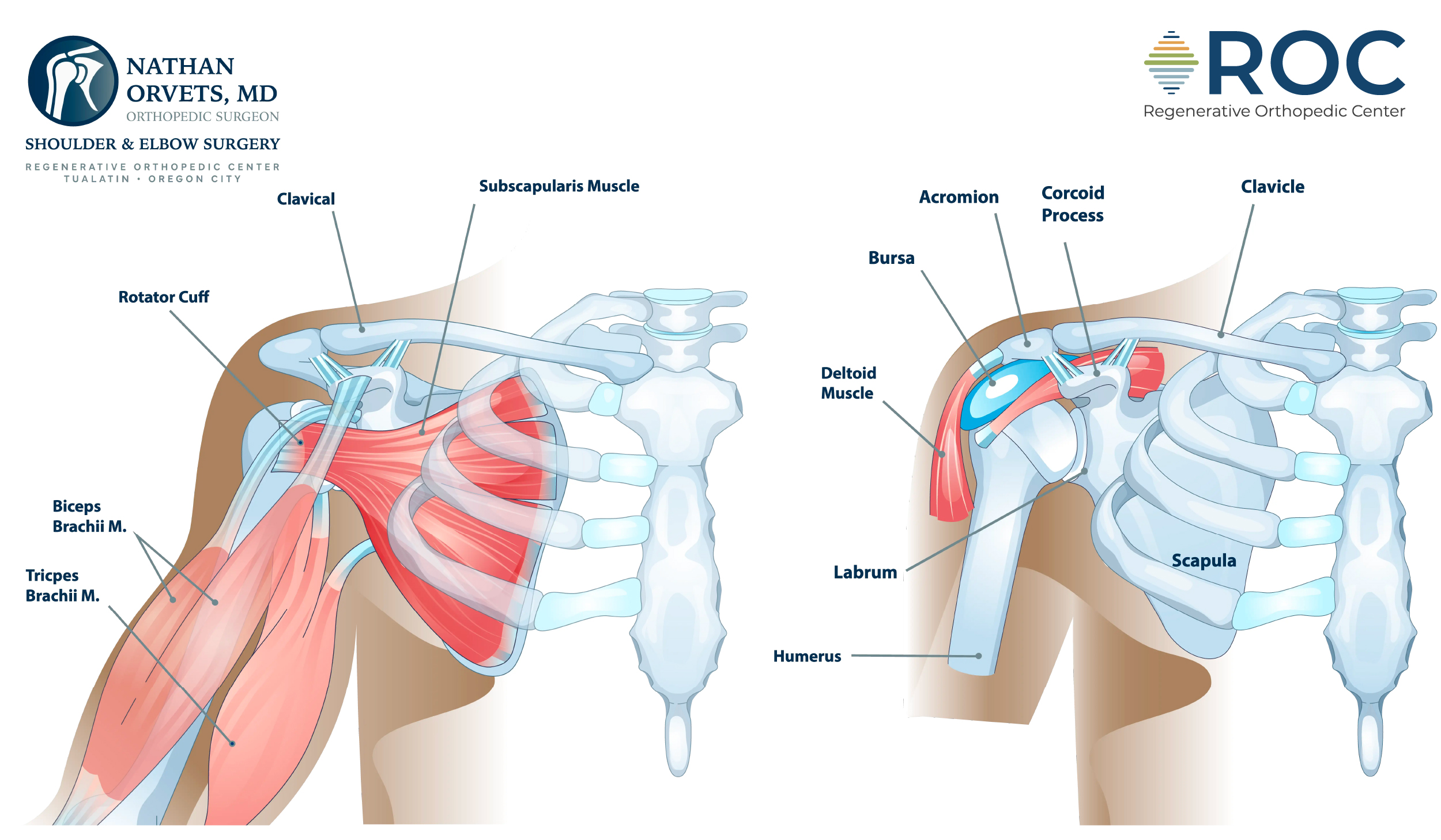
The shoulder is a complex ball-and-socket joint that allows for a wider range of motion than any other joint in the body. The “ball” is the top of the upper arm bone (humerus), called the humeral head. The “socket” is a shallow, cup-shaped portion of the shoulder blade (scapula) called the glenoid. The surfaces of the ball and socket are covered with smooth articular cartilage, which allows the bones to glide smoothly against each other.
The rotator cuff is a group of four muscles and their tendons that surround the shoulder joint, keeping the head of your upper arm bone firmly within the shallow socket of the shoulder. The rotator cuff is important for both stability and movement of the shoulder. Other key structures in the shoulder include the labrum, a ring of cartilage that surrounds the glenoid and helps to deepen the socket, and the biceps tendon, which attaches to the top of the glenoid.
What Conditions May Benefit From Total Shoulder Replacement?
Several conditions can cause damage to the shoulder joint, leading to pain and dysfunction that may necessitate a total shoulder replacement.
- Osteoarthritis: The most common of these is osteoarthritis, a degenerative joint disease where the articular cartilage wears away over time, causing the bones to rub against each other. This often results in pain, stiffness, and reduced mobility.
- Rheumatoid arthritis
- Post-traumatic arthritis
- Severe fractures
For some conditions, reverse shoulder replacement may be a more appropriate procedure. An experienced shoulder surgeon can evaluate the condition and help guide the most effective treatment path.
The Decision-Making Process: Is Total Shoulder Replacement Right for You?
Deciding to undergo total shoulder replacement is a decision that should be made in consultation with your orthopedic surgeon. Your surgeon may conduct a thorough evaluation, including a physical examination, X-rays, and possibly other imaging studies. They will also take a detailed medical history and discuss your symptoms and goals for treatment.
In general, total shoulder replacement may be recommended for patients who have severe shoulder pain that is not relieved by conservative treatments, significant loss of shoulder function, and a willingness to participate in a lengthy rehabilitation program.
Preparing for Total Shoulder Replacement Surgery
Once you and your surgeon have decided that total shoulder replacement is the best course of action, there are several steps you may take to prepare for the surgery and optimize your recovery. These preparations can impact the success of your procedure and your overall experience.
- Medications: Your surgeon will review all medications you are currently taking. You may be advised to stop certain medications several days or weeks before surgery. Always follow your surgeon’s specific instructions regarding medication adjustments.
- Home Preparation:Preparing your home environment can make your recovery period smoother and safer. Consider the following strategies:
- Arrange for Assistance: You may need help with daily tasks for the first few weeks after surgery. Arrange for a friend, family member, or professional caregiver to assist you with cooking, cleaning, dressing, and personal hygiene.
- Remove Obstacles: Clear pathways in your home to prevent falls. Remove throw rugs and ensure good lighting.
- Accessibility: Place frequently used items within easy reach to avoid straining your shoulder. Consider setting up a temporary living space on one floor if your bedroom is upstairs.
- Personal Care Items: Prepare loose-fitting clothing that is easy to put on and take off. Consider adaptive equipment, such as a long-handled sponge or a dressing stick, to assist with personal hygiene and dressing.
The Surgical Procedure
In an anatomic total shoulder replacement, the damaged humeral head is replaced with a metal ball, and the glenoid socket is replaced with a plastic cup. This procedure mimics the natural anatomy of the shoulder and is typically recommended for patients with a functioning rotator cuff. The goal is to restore the normal anatomy of the shoulder to provide pain relief and improved function.
Total shoulder replacement surgery is typically performed under general anesthesia, meaning you will be asleep during the procedure. Often, this can be combined with regional anesthesia, where the shoulder is made numb to prevent pain during and after the surgery making recovery much more comfortable. The surgeon will make an incision to access the joint. The damaged bone and cartilage are then removed, and the artificial components are implanted. Once the components are in place, the surgeon will close the incision with sutures.
Recovery and Rehabilitation
Recovery from total shoulder replacement is a gradual process that often requires patience and commitment to a rehabilitation program. Immediately after surgery, your arm will typically be placed in a sling to protect the new joint.
A physical therapist will likely begin working with you soon after surgery, starting with gentle range-of-motion exercises. Over time, physical therapy will progress to focus on active motion and strengthening. The goal of physical therapy is to restore your range of motion, strength, and function.
Full recovery can take several months to a year or longer. Many patients are able to return to light daily activities within a few weeks.
Summary
Total shoulder replacement is a procedure that may provide significant pain relief and improved function for patients with severe shoulder arthritis and other debilitating shoulder conditions. By understanding the procedure, its indications, and the recovery process, you can make an informed decision about whether total shoulder replacement is right for you. If you are suffering from shoulder pain that is limiting your life, consider talking to a shoulder specialist to see if you are a candidate.
Frequently Asked Questions
Will I be able to return to my normal activities after surgery?
Most patients are able to return to many of their normal daily activities, such as dressing, bathing, and driving, within a few weeks of surgery. In general, there are no restrictions on what can be done with a replaced shoulder after recovery. But, repetitive, heavy overhead lifting is not recommended after a shoulder replacement. Your surgeon and physical therapist will provide personalized recommendations based on your recovery progress.
What are the risks of total shoulder replacement?
As with any surgery, there are risks associated with total shoulder replacement, including infection, nerve damage, blood clots, tearing of the rotator cuff, and implant loosening or dislocation. Your surgeon can discuss these risks with you in detail ahead of the procedure.
How much pain will I have after surgery?
Some pain and discomfort are expected after surgery, especially in the first few days. Your surgical team can provide a pain management plan, which may include medications and non-medication strategies, to help keep you comfortable during recovery.
When can I drive after total shoulder replacement?
Driving restrictions vary, but generally, you should not drive while taking certain medications or while your arm is in a sling. Most surgeons recommend waiting until you have regained sufficient strength and range of motion to safely operate a vehicle and react quickly. Typically this is between 2-6 weeks after surgery. Your surgeon will provide specific recommendations based on your recovery.
Life After Total Shoulder Replacement
For most patients, life after total shoulder replacement is a significant improvement over life before surgery. The majority of patients experience a dramatic reduction in pain and an improvement in their ability to perform daily activities. Many are able to return to recreational activities. However, patients often need to avoid some high-impact activities and heavy repetitive overhead lifting in the long term to protect the new joint.
Key Takeaways
- Anatomic total shoulder replacement is a surgical procedure where the damaged parts of the shoulder joint are replaced with artificial components, called prostheses.
- The primary goal of the procedure is to relieve pain and restore function in shoulders severely damaged by arthritis or other conditions.
- Recovery involves a period of immobilization followed by physical therapy to regain strength and mobility.
If shoulder pain is limiting your life and you’re considering shoulder replacement, schedule a consultation with one of our experts today.