Preserve Your Knee with Bridge-Enhanced ACL Repair (BEAR)
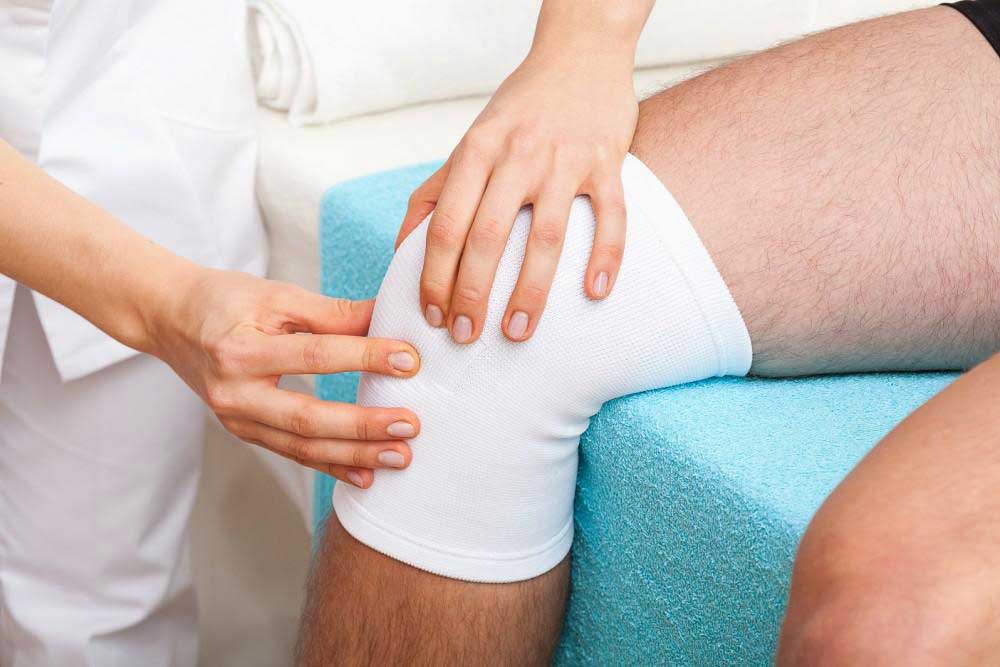
An ACL tear is one of the most common knee injuries and often requires surgery for patients who want to return to sports, work, or an active lifestyle. Traditionally, the only option available has been ACL reconstruction, replacing the torn ligament with a tendon graft. Today, advances in orthopedic care mean that in select cases, ACL repair may be an option. ACL repair preserves the native ligament rather than replacing it, which has been shown to lower the risk of developing post-traumatic knee arthritis when compared to traditional ACL reconstruction.
At ROC, ACL repair is offered using the BEAR® (Bridge-Enhanced ACL Repair) Implant, an innovative approach designed to support the body’s natural healing process while restoring knee stability and function. The procedure is performed by board-certified orthopedic surgeon Jeffrey Feinblatt, who is specially trained through Miach Orthopaedics and is among the most experienced BEAR surgeons in the Pacific Northwest.

Why The BEAR Implant?
The BEAR Implant represents the first major advancement in ACL treatment in more than 30 years. It is the first FDA-approved technology designed to help a torn ACL heal rather than be replaced, marking a meaningful shift in how certain ACL injuries can be treated.
Traditional ACL reconstruction involves removing the torn ligament and replacing it with a tendon graft. ACL repair with the BEAR Implant, however, focuses on preserving the patient’s native ACL. The implant itself acts like a temporary scaffold, creating a bridge between the torn ends of the ligament and helping to support the body’s natural healing process.
By not requiring a tendon from elsewhere on the patient, the BEAR procedure avoids the need for a second surgical site. For appropriate candidates, this approach may offer a more biological repair while restoring knee stability and function.
Answers to ACL Treatment Questions
What are some potential drawbacks to ACL reconstruction?
-Roughly half of the patients who receive patellar tendon grafts experience pain while kneeling.
-Those who receive hamstring grafts have persistent weakness, as much as a 50% deficit at two years.
-ACL reconstruction has a re-tear rate as high as 20% for teens and as high as 9% for adults.
-Patients who opt for reconstruction over repair are as much as 6 times more likely to develop post-traumatic osteoarthritis (PTOA) within 6 years after surgery, according to a recent study by Miach Orthopaedics who make the BEAR® Implant.
-Revision ACL procedures can be fraught with technical difficulties.
Why is ACL repair an option now when it wasn't previously?
The ACL wants to, but does not, heal well on its own. Synovial fluid, a thick liquid present in the joint, nourishes and improves motion between the cartilage cap at the ends of the bones, but also prevents the formation of a blood clot around the torn ends of the ACL that is vital to healing.
Until now, orthopedic surgeons did not have a good way to establish and maintain this blood clot around the ACL. As such, surgery previously focused on reconstruction – cutting out the remaining ends of the ACL, drilling holes in the femur and tibia with holes that approximate the attachment sites of the ACL and replacing the ACL with a tendon from the patient or a cadaver.
Now, with ACL repair, the ACL attachment sites on the bone are maintained. The ACL is sutured, and the ends are brought together along with the BEAR and the patient’s blood. The implant is placed through a small incision off the side of the kneecap; all other procedures, including meniscal work, are performed arthroscopically. The implant holds and protects the blood, allowing the formation of a clot and facilitating the body’s own natural healing response, including cell migration and proliferation. Over the next 8 weeks, the BEAR implant is resorbed by the body and replaced with native ACL tissue, which continues to remodel and strengthen over time.
Who is the BEAR procedure for?
Dr. Feinblatt may recommend ACL repair with the BEAR implant if you are at least 14 years of age, with a rupture of the ACL, confirmed by MRI. You must have an ACL stump attached to the tibia to facilitate the restoration.
The BEAR implant and ACL repair have some of the same potential medical/surgical complications as other orthopedic surgical procedures. These include the risk of re-tear, infection, knee pain, limited range of motion, deep venous thrombosis, and anesthetic risk.
ROC’s BEAR Implant Surgeons
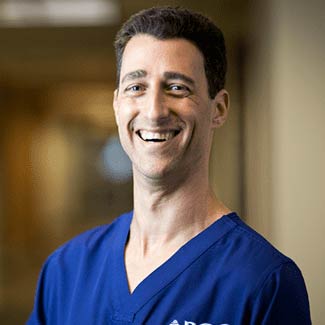
Jeffrey Feinblatt, M.D.
Reconstructive Knee, Foot, and Ankle Surgery and Sports Medicine
The BEAR implant and ACL repair represent a significant advancement in how we approach ACL procedures. It matches my philosophy, that we should try to repair and restore function whenever feasible. I believe that as the procedure gains more widespread use, the ability to preserve and restore native ACL fibers will become the default procedure when possible, and surgeons will use ACL reconstruction (using a patient’s or cadaver tendon) only in cases where the ACL cannot be repaired.
Dr. Feinblatt's Work with the BEAR Implant
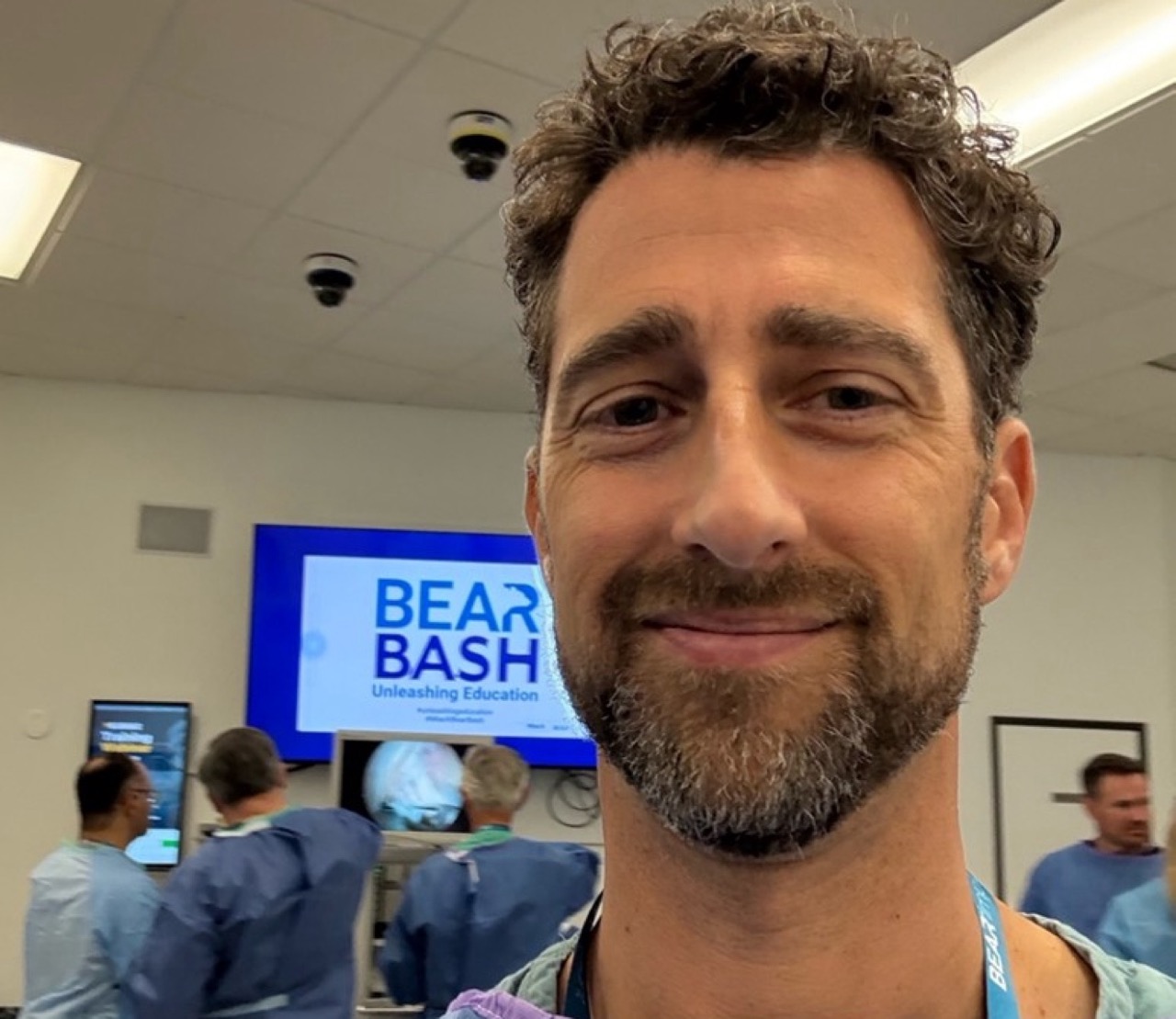
Dr. Feinblatt at a course for surgeons experienced with ACL repair and the BEAR Implant.
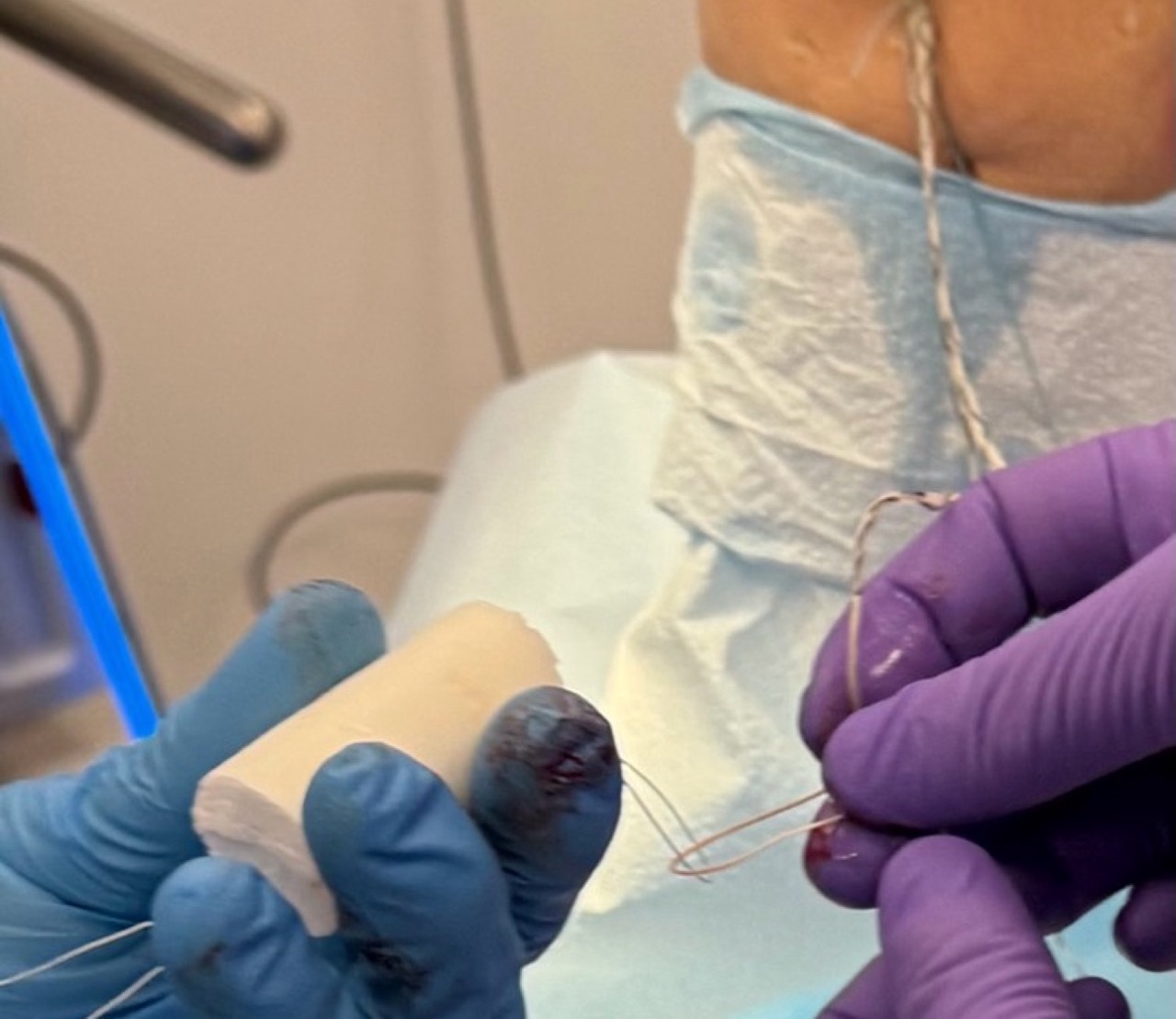
Passing suture through the BEAR Implant.
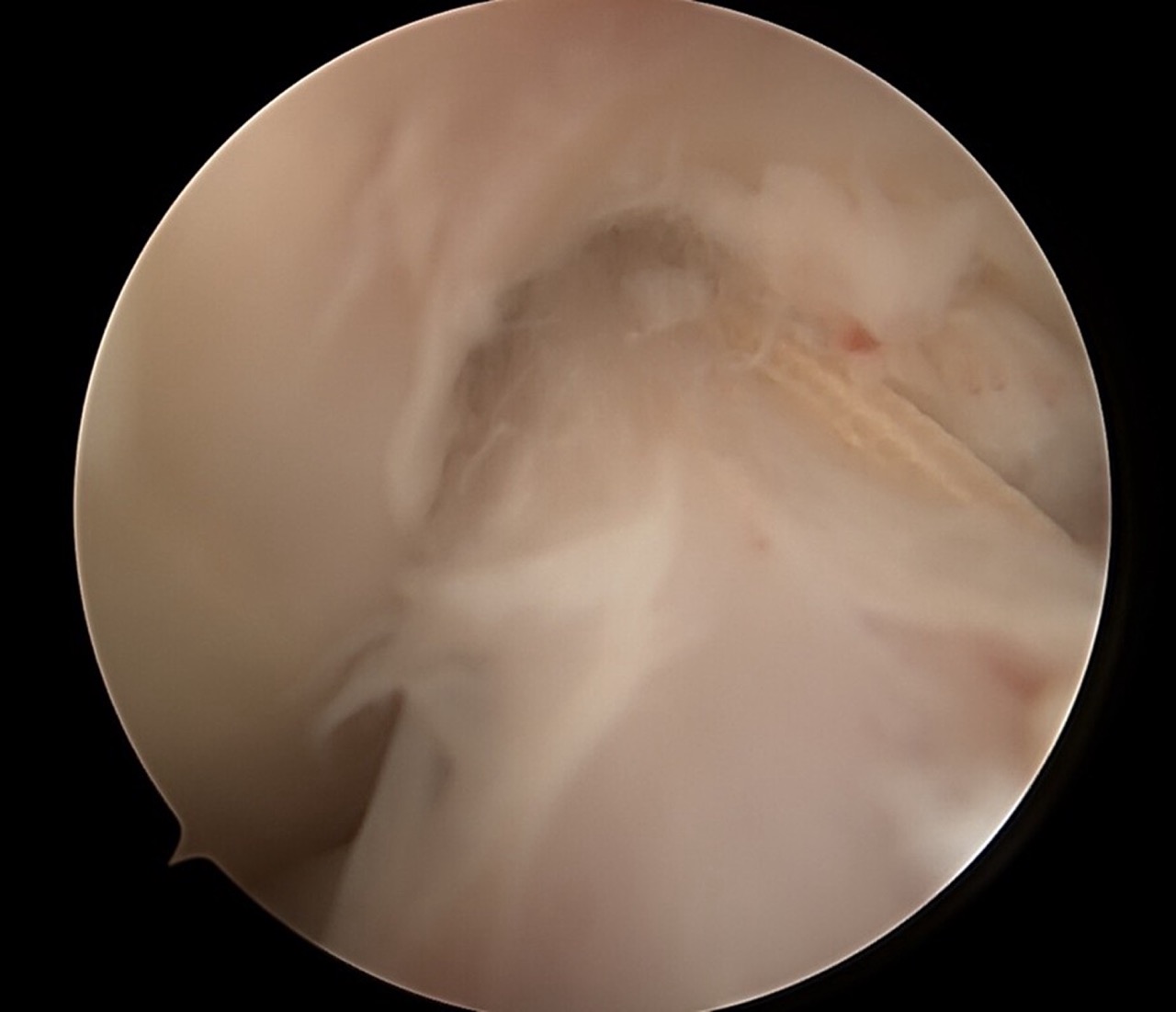
ACL repair with BEAR appearance at 4 months. The patient was brought to the OR for stiffness in the knee.